Small junctions.
Big responsibilities.
Chimneys, valleys and roof-to-wall joints do demanding work in an exposed position. Careful assessment helps distinguish tired mortar, defective flashing and problems in the surrounding roof.
Discuss your roof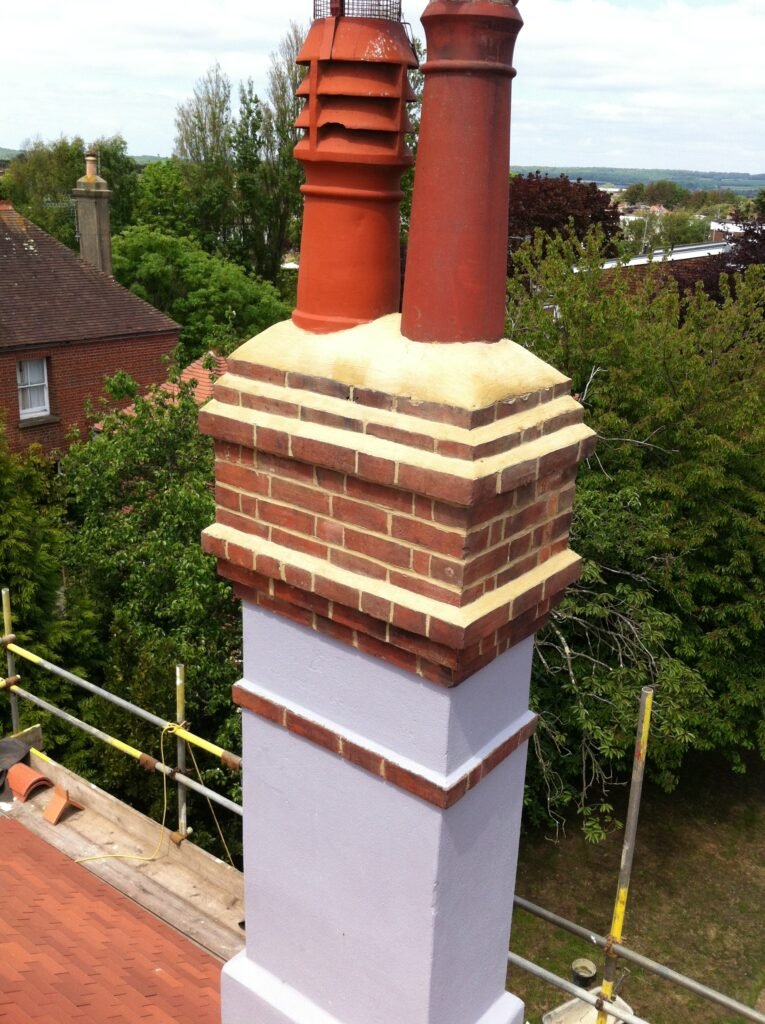
Look at the connection, not just the crack.
Damp around a chimney can have more than one cause. The masonry, mortar, flaunching, pots, leadwork and adjoining covering form a connected detail. Understanding how water is entering is the first step towards a proportionate repair.
What to consider
- Chimney condition and mortar-joint assessment
- Lead flashings, soakers and roof abutments
- Valleys and water-shedding junctions
- Access planning around shared or neighbouring structures
Details that allow for movement and water
Careful leadwork helps keep water out where the roof meets a wall or chimney. We’ll look at how those junctions are performing and explain any repair needed, with attention to support, movement and the way water runs off your roof.
Make the first conversation useful.
Tell us whether the chimney is shared and where the damp appears indoors. If you have records of previous work, include them in the enquiry. A visible lean or loose material should be described when you call so access and urgency can be discussed.
Tell us about the roof and where the property is. There’s no need to know the technical name for the problem.
Your questions, answered.
Can pointing alone stop a chimney leak?
Only if defective pointing is the source of the problem. Flashings, flaunching and adjoining roof details may also need attention.
Does a chimney have to be rebuilt?
Often, a repair is the right place to start. We’ll assess the chimney’s condition, explain what needs attention and discuss whether repointing, leadwork repairs or more extensive work would be appropriate.
Connected parts of your roof.
A little clarity.
A good next step.
Tell us what’s happening, or what you’re planning. We’ll start with the right questions.
020 3886 3441 ↗yourdulwichroofers@gmail.com